
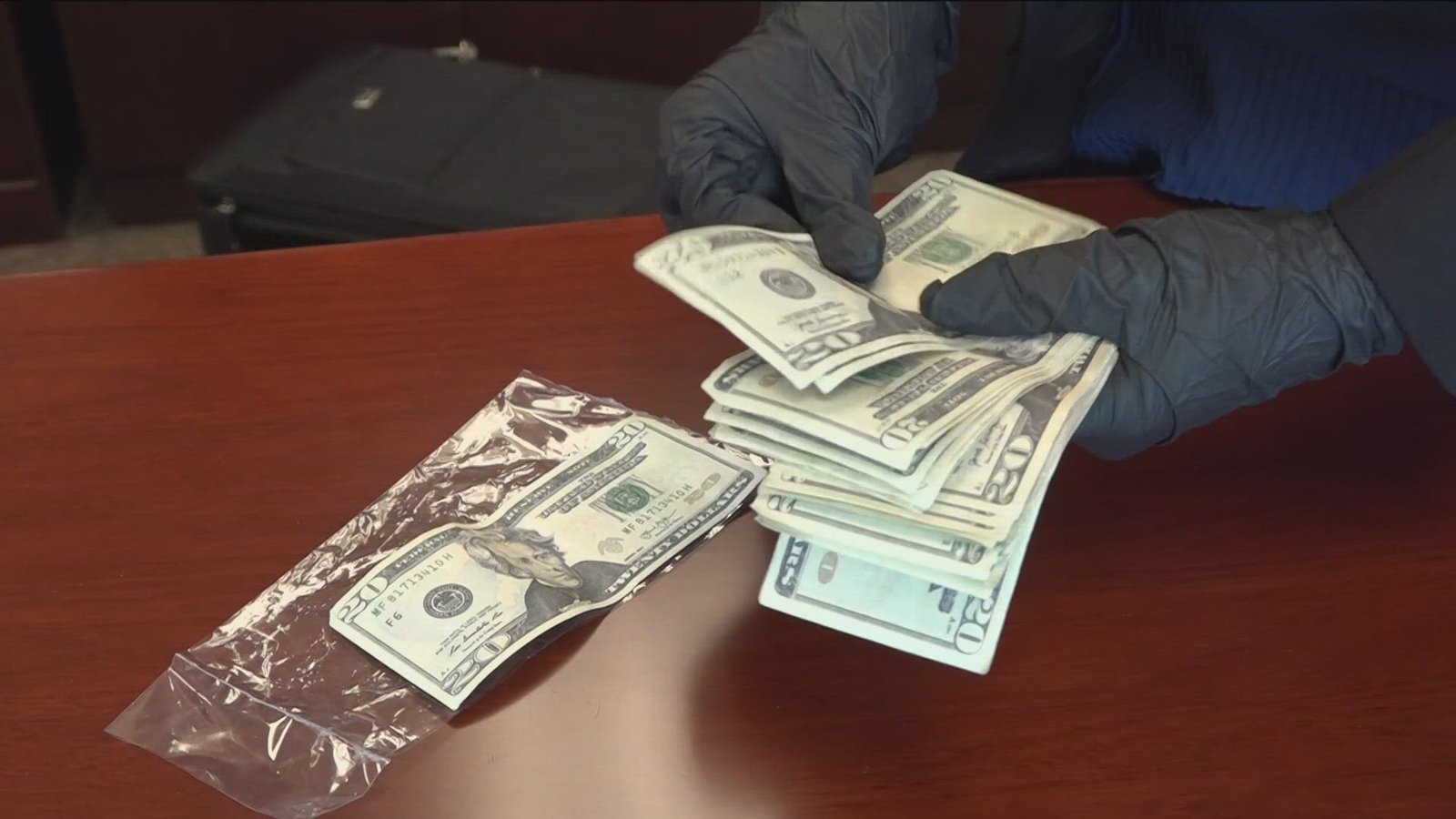
Money is an essential part of everyday life, but not every item designed to look like a banknote is genuine currency. Counterfeit money, replica banknotes, and prop money are terms frequently used in discussions about currency reproduction, entertainment, education, and financial crime. Although these items may share certain visual characteristics, they have different meanings, purposes, and legal implications.
Understanding the difference is important for consumers, collectors, filmmakers, photographers, educators, retailers, and businesses that handle physical currency. It also helps prevent misunderstandings about what can legally be produced, possessed, displayed, or used.
In this guide, we examine what counterfeit money, replica banknotes, and prop money mean, how they differ, where they may be encountered, and why legal requirements should always be considered before reproducing or using currency-like materials.
What Is Counterfeit Money?
Counterfeit money refers to unauthorized currency reproductions created to imitate genuine banknotes or coins, typically with the intention of deceiving people into accepting them as authentic money.
Counterfeiting is a serious financial crime because it undermines confidence in national currencies and can cause financial losses for individuals, businesses, and financial institutions.
Genuine banknotes are issued by authorized monetary institutions and produced under controlled conditions. They incorporate specialized materials, printing processes, and security features intended to support authentication.
Counterfeit currency, by contrast, is not authorized by the relevant issuing authority. Even when a reproduction resembles a genuine banknote, it does not acquire the legal status or monetary value of the original currency.
Why Is Counterfeit Money a Financial Crime?
Currency depends on public confidence. People accept banknotes because they trust that the money has been issued or authorized by the relevant monetary authority.
When counterfeit money enters circulation, that confidence can be undermined. A person who unknowingly accepts a counterfeit note may suffer a financial loss because the reproduction cannot legitimately be used as genuine currency.
Counterfeiting can also be associated with organized criminal activity, fraudulent transactions, and other financial offences.
Depending on the jurisdiction, offences may include manufacturing, possessing, distributing, importing, or knowingly attempting to use counterfeit currency.
What Are Replica Banknotes?
Replica banknotes are reproductions or representations of genuine banknotes. The term can describe a broad range of items, including historical currency reproductions, educational specimens, display materials, and artistic representations.
The important distinction is that the word “replica” does not automatically establish that a banknote reproduction is legal.
Some replicas are produced for legitimate educational, historical, or display purposes. Others may violate currency reproduction laws if their appearance, dimensions, materials, or intended use make them capable of being mistaken for genuine money.
For example, a museum may display a reproduction of an obsolete banknote to help visitors understand the history of currency. An educational institution may use clearly identified specimens to explain banknote design and security features.
These uses are different from producing or distributing unauthorized reproductions intended to pass as genuine currency.
Common Legitimate Uses of Banknote Reproductions
Educational displays: Schools, universities, and museums may use permitted reproductions to explain monetary history, currency design, and financial systems.
Historical research: Researchers and collectors may study reproductions when examining the appearance and development of historical currencies.
Publications and illustrations: Books, newspapers, websites, and educational materials may include banknote images, subject to applicable reproduction requirements.
Museum and exhibition displays: Clearly identified reproductions can help visitors understand the development of money without requiring rare or valuable original banknotes to be handled.
Currency design education: Students and researchers may examine authorized illustrations to understand the artistic and technical elements of banknote design.
What Is Prop Money?
Prop money is a general term for imitation money used as a visual or theatrical object in entertainment, photography, advertising, education, and other creative productions.
It may appear in films, television programmes, music videos, theatre performances, stage productions, and promotional photography.
Unlike genuine currency, prop money is not intended to function as legal tender. Its purpose is to represent money visually within a particular scene or production.
However, calling an item “prop money” does not automatically make its production, possession, sale, or distribution lawful. Currency reproduction laws may apply even when the intended purpose is entertainment.
Where Is Prop Money Commonly Used?
Film and television: Production teams may use permitted money props in scenes involving shopping, banking, business transactions, or fictional financial activities.
Music videos: Directors and production designers may use clearly identifiable theatrical props to create a particular visual setting.
Theatre and stage performances: Stage productions may require imitation currency to support realistic storytelling.
Photography: Commercial photographers may use lawful props when creating financial, lifestyle, or business-themed images.
Educational demonstrations: Instructors may use suitable imitation materials to explain basic financial concepts or demonstrate cash-handling procedures.
Advertising and creative campaigns: Approved representations of money may appear in promotional materials, provided they comply with relevant laws and do not mislead the public.
The central requirement is that the reproduction must comply with the laws governing the currency it represents and must not be used to deceive people or facilitate unauthorized financial transactions.
Counterfeit Money vs Replica Banknotes vs Prop Money: What Is the Difference?
Although these expressions are sometimes used interchangeably, they describe different concepts.
| Category | Meaning | Typical context | Main consideration |
|---|---|---|---|
| Counterfeit money | Unauthorized currency produced to imitate genuine money, commonly for fraudulent use | Financial crime and fraudulent transactions | Illegal manufacture or use can result in criminal penalties |
| Replica banknotes | Reproductions or representations of genuine banknotes | Education, historical research, collections and displays | Must comply with applicable reproduction rules |
| Prop money | Imitation money used as a visual object in entertainment or creative productions | Films, photography, theatre and advertising | Must meet applicable legal and reproduction requirements |
| Genuine banknotes | Officially issued or authorized currency | Everyday financial transactions and collecting | Subject to the issuing authority’s currency rules |
The most important distinction is not simply how an item looks, but whether it is authorized, how it is represented, and what it is intended to do.
A reproduction created for a film may still violate the law if it does not satisfy the relevant banknote reproduction requirements. Similarly, a product advertised as a replica or training note should not automatically be assumed to be lawful.
Are Replica Banknotes and Prop Money Legal?
The legality of banknote reproductions depends on the country, the currency being represented, and the characteristics and intended use of the reproduction.
Different central banks and governments have established rules governing the reproduction of their currencies. These rules may address dimensions, printing materials, image orientation, visible markings, image quality, and the circumstances in which reproductions may be used.
Some jurisdictions permit certain reproductions without individual approval when specified conditions are met. Others require permission or impose restrictions on particular forms of reproduction.
Therefore, there is no universal rule stating that all replica banknotes or prop money are legal.
United States Currency Reproduction Rules
In the United States, federal law permits certain illustrations of U.S. currency when specific conditions are satisfied.
According to the Bureau of Engraving and Printing, colour illustrations must meet requirements concerning their dimensions, one-sided presentation, and the destruction or deletion of materials used to produce the illustration after its final use.
The applicable requirements are explained under federal law, including 18 U.S.C. § 504 and related regulations.
Official reference: https://www.bep.gov/currency/currency-image-use
Anyone intending to reproduce U.S. currency should consult the official rules rather than assume that describing an item as a movie prop or educational specimen creates an exemption.
United Kingdom Banknote Reproduction Rules
The Bank of England regulates the reproduction of its banknotes and provides specific conditions for physical and digital reproductions.
For example, its physical reproduction requirements include restrictions on dimensions and double-sided presentation. Depending on the reproduction, other conditions may involve the material used or the inclusion of a visible “SPECIMEN” marking.
The Bank of England also makes clear that products marketed as movie, prop, or training notes must satisfy its reproduction conditions.
This is particularly important because the use of a disclaimer or the label “prop money” does not automatically make an otherwise unlawful reproduction acceptable.
Official reference: https://www.bankofengland.co.uk/banknotes/using-images-of-banknotes
European Union Euro Banknote Reproduction Rules
The European Central Bank has established rules governing the reproduction of euro banknotes.
Certain physical and digital reproductions are permitted when they satisfy the applicable requirements. The conditions vary depending on factors such as whether one or both sides are reproduced, the dimensions, and the type of reproduction.
In certain circumstances, reproductions that do not meet the standard criteria may require specific authorization.
These rules are designed to reduce the possibility that reproductions could be mistaken for genuine euro banknotes.
Official reference: https://www.ecb.europa.eu/euro/banknotes/images/html/ecb.faq_reproduction_rules_euro_banknotes.en.html
Australian Banknote Reproduction Rules
Australia also imposes restrictions on reproducing its banknotes.
The Reserve Bank of Australia explains that the Crimes (Currency) Act 1981 prohibits reproductions or representations of banknotes that might mislead people into believing they are genuine currency.
This illustrates why entertainment, educational, or decorative intentions do not automatically remove legal responsibilities.
Official reference: https://banknotes.rba.gov.au/questions-and-answers/reproduction/
Canadian Banknote Reproduction Rules
The Bank of Canada provides guidance on using images of Canadian banknotes.
Commercial users must obtain the Bank’s permission to reproduce banknote images. Canadian criminal and copyright laws also govern the reproduction of currency images and designs.
This is relevant to publishers, advertising agencies, designers, filmmakers, and other businesses that intend to use Canadian banknote imagery commercially.
Official reference: https://www.bankofcanada.ca/banknotes/using-bank-note-images/
Why Do Governments Restrict the Reproduction of Banknotes?
Currency reproduction restrictions are intended to protect the integrity of national money and reduce the risk of deception.
Even reproductions created for seemingly harmless purposes can cause problems if they are sufficiently similar to genuine banknotes and can be mistaken for legal tender.
Several important reasons explain why these rules exist.
Protecting Public Confidence in Currency
People need to recognize genuine money and trust that the currency they receive is authentic.
Unauthorized reproductions that resemble real banknotes too closely can undermine that confidence and create uncertainty during financial transactions.
Preventing Financial Fraud
Restrictions help reduce the risk of imitation currency being used to deceive retailers, consumers, financial institutions, and other members of the public.
Protecting National Currency Designs
Banknote designs often contain protected artistic elements, portraits, national symbols, and other intellectual property.
Issuing institutions may impose restrictions to protect these designs and control how their currency is represented.
Supporting Law Enforcement
Clear reproduction requirements help authorities distinguish legitimate educational and creative uses from activities involving counterfeit currency and financial deception.
How Can You Tell Whether a Banknote Reproduction Is Legitimate?
Determining whether a currency reproduction is lawful can require more than looking at the product description or packaging.
A seller’s statement that an item is intended for movies, training, photography, or education does not establish legal compliance.
When evaluating a banknote reproduction, consider the following points:
Check the applicable laws. Identify the country and currency represented, then consult the relevant central bank or government authority for its reproduction requirements.
Examine the intended purpose. Consider whether the item is clearly intended for education, display, theatrical use, or another legitimate activity.
Review official reproduction requirements. Some authorities specify conditions concerning size, materials, image orientation, markings, and permission.
Be cautious of misleading descriptions. Claims that imitation currency can be used for real purchases, cash withdrawals, or other financial transactions are serious warning signs.
Seek clarification where necessary. If the legal status of a reproduction is uncertain, contact the issuing authority or obtain qualified legal advice before purchasing, producing, or distributing it.
It is also important to remember that an item can be unsuitable or unlawful even when it contains words such as “copy,” “specimen,” “movie money,” or “not legal tender.”
Why the Difference Matters to Consumers and Businesses
Understanding the distinction between counterfeit money, replica banknotes, and prop money is useful for more than legal compliance. It also helps protect people from financial losses and misleading commercial claims.
For Consumers
Consumers should know that not everything resembling money has monetary value. Accepting an imitation banknote as genuine can result in financial loss.
People should be cautious when encountering offers that promise unrealistic financial benefits or claim that imitation currency can be exchanged or used as genuine money.
For Retailers and Cashiers
Retailers and cash-handling employees should understand the difference between genuine banknotes and imitation materials.
Businesses should establish procedures for checking suspicious notes and reporting suspected counterfeit currency to the appropriate authorities.
For Filmmakers and Photographers
Creative professionals should verify the legal requirements before using banknote reproductions in productions.
This is particularly important when working with recognizable national currencies or creating content intended for public distribution.
For Collectors and Researchers
Collectors should distinguish original historical banknotes from reproductions, replicas, and educational specimens.
Accurate descriptions help prevent misunderstandings about authenticity, rarity, historical value, and monetary status.
For Publishers and Designers
Publishing houses, graphic designers, marketing agencies, and educational content creators should review applicable reproduction rules before using banknote imagery in printed or digital materials.
Permission and reproduction requirements can vary considerably between issuing authorities.
Common Misconceptions About Counterfeit Money and Prop Money
Several misunderstandings frequently arise when people discuss imitation currency.
Anything Labelled “Prop Money” Is Legal
This is incorrect. The intended use of a product does not automatically make its reproduction lawful. Applicable currency laws and reproduction requirements still apply.
Replica Banknotes Can Be Used as Genuine Currency
Replica banknotes are not automatically legal tender. A reproduction created for educational or display purposes does not acquire the monetary value of the original currency.
A Disclaimer Makes Any Currency Reproduction Legal
A statement such as “not legal tender” or “for entertainment purposes only” does not necessarily satisfy the legal requirements established by a central bank or government.
Old Banknote Reproductions Are Always Exempt From Restrictions
Some authorities regulate reproductions of withdrawn or historical banknotes as well as current currency. The rules must be checked for the particular issuing authority.
All Countries Have the Same Banknote Reproduction Rules
Currency reproduction requirements differ across jurisdictions. A reproduction that meets the rules in one country may not satisfy the requirements in another.
The Role of Currency Education in Preventing Financial Fraud
Public understanding of currency is an important part of financial security.
People who understand the purpose of banknotes, their security features, and the distinction between genuine currency and reproductions are better prepared to identify suspicious materials and avoid misleading claims.
Educational programmes offered by central banks and financial institutions help consumers and businesses recognize genuine banknotes and understand how to respond when suspicious currency is encountered.
Currency education is particularly important in environments where cash remains widely used, including retail businesses, markets, transport services, and small enterprises.
It also supports wider discussions about financial literacy, payment technology, economic trust, and the protection of national currencies.
Frequently Asked Questions
What is the difference between counterfeit money and prop money?
Counterfeit money refers to unauthorized currency reproductions commonly created to deceive people into accepting them as genuine. Prop money is imitation money intended for visual use in entertainment, photography, theatre, or other creative productions. However, prop money must still comply with applicable currency reproduction laws.
Are replica banknotes real money?
No. A replica banknote is a reproduction or representation of a genuine banknote. It does not automatically have legal-tender status or the monetary value of the original currency.
Can prop money be used in films and music videos?
Prop money may be used in films, music videos, theatre, and photography when its production and use comply with the relevant legal requirements. The intended entertainment purpose does not automatically exempt it from currency reproduction laws.
Is it legal to sell replica banknotes?
The answer depends on the jurisdiction, the currency represented, the design, the reproduction method, and the applicable legal requirements. Sellers should verify the rules governing the currencies they reproduce and distribute.
Does writing “not legal tender” on imitation money make it legal?
Not necessarily. A disclaimer may help communicate the intended purpose, but it does not automatically satisfy the reproduction requirements established by a central bank or government.
Can old banknotes be reproduced for educational purposes?
Some jurisdictions permit certain reproductions of historical banknotes for educational, research, or publication purposes. However, restrictions may still apply, including rules concerning size, materials, image presentation, and copyright.
Are movie prop notes the same as counterfeit banknotes?
Not necessarily. Properly compliant theatrical props are intended for visual use rather than financial transactions. However, a product marketed as movie money may still violate currency reproduction laws if it does not meet the relevant conditions.
Who regulates banknote reproductions?
Depending on the country, regulation may involve the central bank, government treasury, law-enforcement agencies, or other designated authorities. The responsible institution and applicable laws vary by jurisdiction.
Conclusion
Counterfeit money, replica banknotes, and prop money may appear in similar conversations, but they represent different concepts with important legal and practical distinctions.
Counterfeit currency involves unauthorized reproductions associated with financial deception. Replica banknotes may serve legitimate educational, historical, or display purposes, while prop money is generally intended for entertainment and creative productions.
However, neither the word “replica” nor the label “prop money” automatically establishes that a reproduction is lawful. The rules governing currency reproduction differ between countries and may apply even when the intended purpose is non-commercial or educational.
Understanding these distinctions helps consumers avoid misleading claims, enables businesses to handle currency responsibly, and allows creative professionals and educators to make informed decisions.
Ultimately, the safest approach is to consult the official guidance of the relevant central bank or monetary authority before producing, purchasing, reproducing, or distributing any material that resembles genuine currency.
